Before you start
Newcomers and established residents. Membership and programs are local; not all services require the same documents or eligibility.
- Check your local library’s membership page for accepted identification and address evidence. Ask about alternatives before making a trip if you have only temporary accommodation.
- Decide what you need: a computer, printing, a study space, language practice, children’s activities or a settlement appointment. Ask whether booking or a card is required for that particular service.
- Check charges and limits for printing, borrowing devices and late or lost items. Free membership does not mean every service is free.
Program rules: Mississauga Library. Preparation questions are suggestions, not extra eligibility requirements.
Steps
- Find your nearest branchSearch your municipality and "public library". Check the official address, opening hours and accessibility information. Ask which branches offer materials or programs in your preferred language; services differ by location.
- Get a free library cardCheck local membership and identification rules before visiting. For example, Mississauga offers free cards to people who live, work, attend school or own property there. This is a local policy, not a national rule. If you lack proof of address, ask staff about alternatives or limited-access options.
- Ask about newcomer programsMany libraries run free English conversation circles, settlement information sessions, and help with the Canadian citizenship study guide ("Discover Canada"). Ask staff or check the library’s newcomer page.
- Use computers, Wi-Fi, and printingPublic libraries offer free computer time, internet, and low-cost printing — useful for filling out government forms and printing documents for a SIN or health card appointment.
- Explore books and media in your languageLarger systems hold collections in many languages. The Library Champions Project and NewToBC (in British Columbia) are examples of library-based newcomer support; similar programs exist in other provinces.
What to expect—and where people get stuck
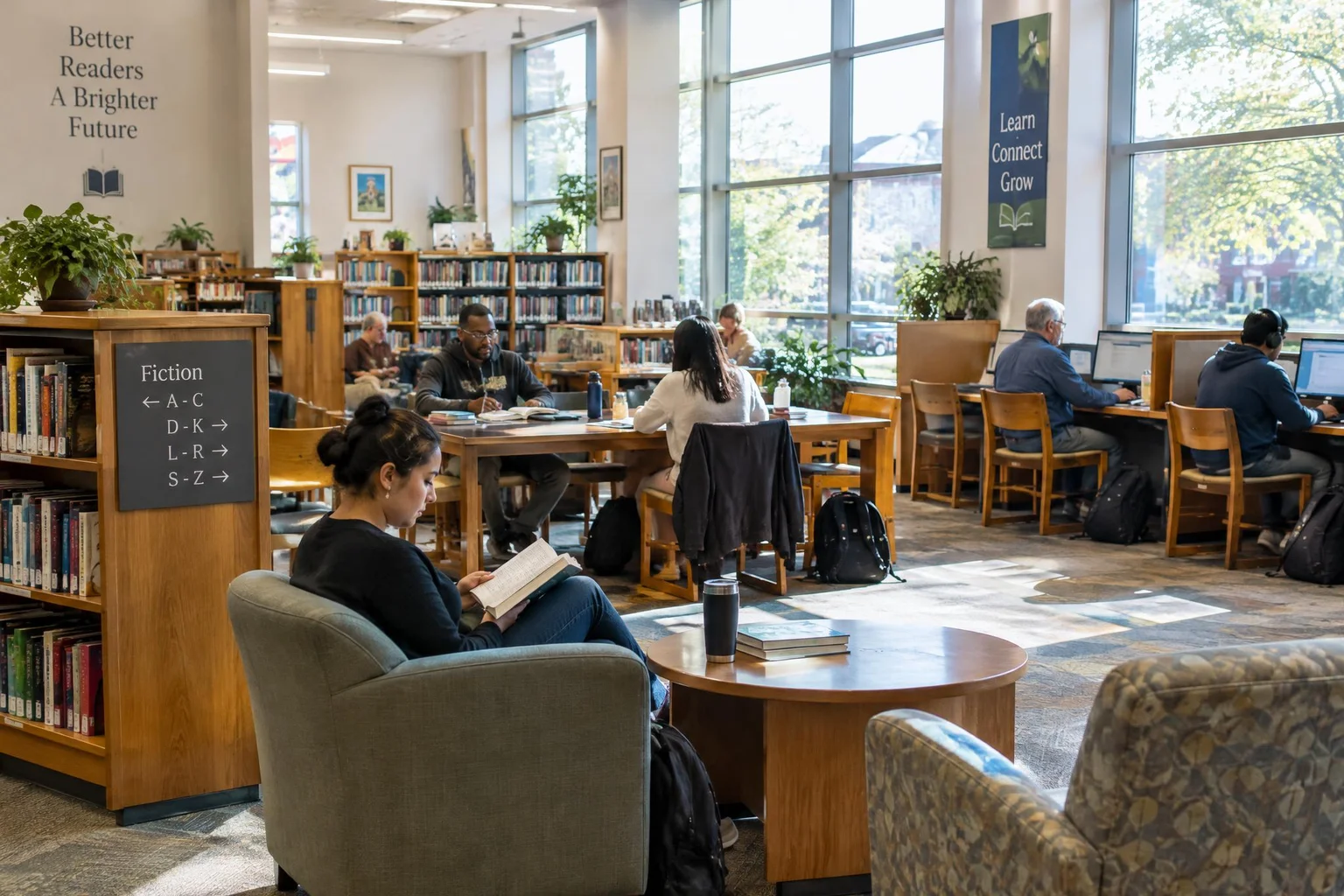
Libraries are useful even before you know the whole local service system. Mississauga, for example, lists newcomer programs, multilingual materials, technology access and visiting service providers. Your branch’s program may be different.
Digital materials may need a library-card login and some activities need registration. Ask staff for help signing in, and sign out of email and government accounts before leaving a shared computer.
Check the current official instructionsQuestions worth asking
- Can I join with the documents and address evidence I have?
- Is there a conversation group or settlement worker at this branch?
- What is free, what costs extra, and what needs a reservation?
Copy these questions into your own notes. No personal information is collected here.
Important caveats
- Card rules and services vary by library system. Confirm exact ID requirements with your local branch.
- Some programs are regional. The British Columbia examples are illustrations, not endorsements.
Sources
Maple Neighbours does not provide immigration, legal, or medical advice. See our disclaimer.